
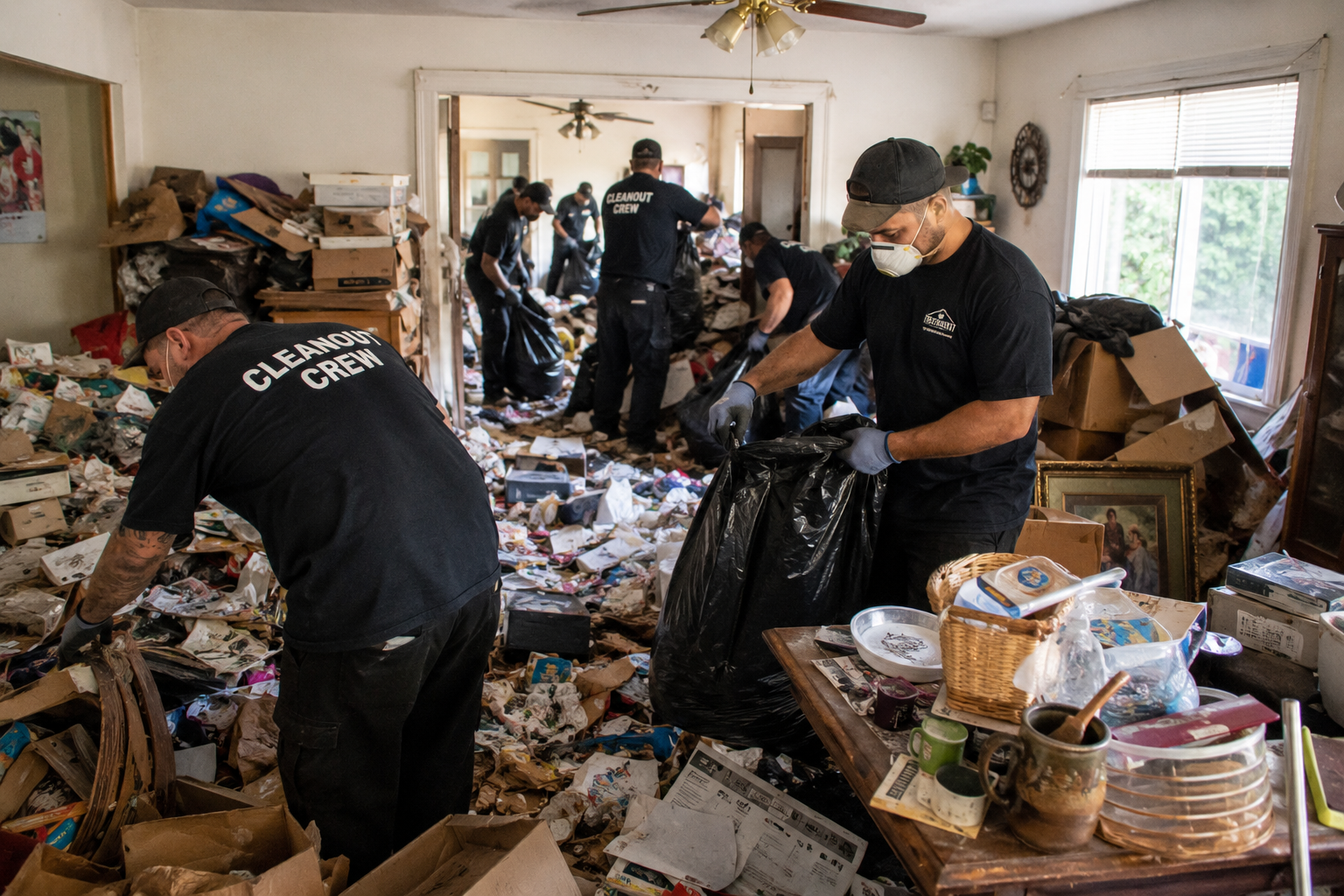
How Long Does a Professional Hoarding Cleanout Take?
How long does a professional hoarding cleanout take? In our experience, most average hoarding cleanouts take one full day with the right crew, trucks, and plan.
For a normal cleanout, we usually need at least four people, two dump trucks, and a full 8 to 10-hour workday.
Larger or more difficult cleanouts may take two days. This usually happens when the property has multiple buildings, tight access, heavy debris, or scattered junk across a large area.
With the right crew, vehicles, dumpsters, and planning, we have typically not needed more than two days for a professional hoarding cleanout.
The Average Hoarding Cleanout Timeline
Most professional hoarding cleanouts fall into one of two timelines.
A standard cleanout usually takes one full day. A large or difficult cleanout may take two days.
The timeline depends on the amount of debris, access, safety issues, and dump logistics.
One-Day Hoarding Cleanouts
A one-day hoarding cleanout is common when the crew can move safely and work efficiently.
This usually means:
- The family has already removed personal items
- The crew has clear access to the home
- Trucks can park close to the debris
- The home does not have major safety issues
- The property is close enough to a dump or transfer station
- The family is not still sorting during the cleanout
A one-day job is still a long day. The crew may work 8 to 10 hours moving thousands of pounds of material. Those materials often include everyday household belongings, furniture, appliances, clothing, trash, and years of accumulated clutter. Our guide to what items are typically removed during a hoarding cleanout explains what crews commonly encounter and why every property is a little different.
Two-Day Hoarding Cleanouts
A two-day cleanout is usually a larger project.
This can happen when the property has:
Multiple buildings
A packed garage or shop
A barn or outbuilding
Debris spread across the property
Tight walkways
Stairs or basements
Long walking distances
Safety concerns
Long trips to the dump
Two-day cleanouts require more planning. We may need extra crew members, dump trucks, dumpsters, and a clear schedule. Larger projects also tend to require more labor, equipment, and disposal, which is why they often cost more. If you’re wondering what affects the final price, our guide on how much a hoarded house cleanout typically costs explains the biggest factors that influence the total cost.
What Makes a Professional Hoarding Cleanout Take Longer?
The biggest delays usually come from access, sorting, safety, and logistics.
The amount of junk matters. However, the way the junk is located matters too.
A house packed with tight walkways can take longer than an open space with the same amount of debris.
Tight Walkways and Limited Access
One of the biggest things that slows down a hoarding cleanout is limited space.
In many hoarded homes, there may only be a narrow path through the debris. This makes it hard for several crew members to work at the same time.
Before the crew can move fast, they often need to create a safe work path.
That first step matters. Without clear access, the job moves slower and becomes more difficult.
Stairs, Basements, and Upstairs Rooms
Stairs can add a lot of time.
Carrying items from a basement or second floor takes more labor. It also increases fatigue.
If the crew has to carry every bag, box, or piece of furniture up or down stairs, the cleanout will take longer.
Family Members Still Sorting
This is one of the biggest slowdowns.
We have had jobs where family members were still going through items while the crew worked. That can turn a cleanout into a much longer day.
It also creates confusion for the crew.
If the family has to decide on every item, the job loses momentum. That is why we prefer families to sort before cleanout day.
Long Walking Distances
The closer we can get a truck or dumpster to the debris, the faster the job goes.
If we have to park far away, every item takes longer to remove.
Long carry distances slow down the crew and add fatigue. This matters even more on large properties or homes with debris spread across the yard, garage, and outbuildings.
Safety Issues
Safety concerns can also slow the job down.
If there are needles, drugs, sharp objects, strong odors, mold, animal waste, or unknown materials, the crew has to work more carefully.
In some cases, the crew may need masks, gloves, or other protective gear.
Safety comes first. A cleanout should never move so fast that the crew gets hurt.
Heat and Physical Fatigue
Hoarding cleanouts are physical jobs.
The crew may carry thousands of pounds in one day. If it is hot, the work can slow down.
Masks and protective gear can also add to fatigue. That is especially true in homes with strong odors or poor airflow.
Dump Runs and Transfer Station Distance
Dump logistics can change the whole timeline.
If the property is far from a dump facility or transfer station, the job can take longer.
When a dump truck leaves the site, it may take over an hour to dump and return. During that time, the crew may lose momentum if the other truck or dumpster is not ready.
That is why planning matters. The goal is to keep the crew moving and avoid downtime.
How Customers Can Help the Cleanout Go Faster
Good preparation can make a huge difference. Taking a little time to remove personal belongings, mark the items you want to keep, and prepare the property before the crew arrives can make the cleanout much faster and less stressful. If you’re not sure where to start, our guide on how to prepare for a professional hoarding cleanout walks you through the process step by step.
A professional crew can move quickly when the property is ready. But if the crew has to wait for decisions, move vehicles, or work around family members, the job can slow down fast.
Remove Personal Items First
Before cleanout day, go through the home and remove personal items.
This may include:
- Important paperwork
- Photos
- Jewelry
- Medications
- Family keepsakes
- Legal documents
- Items going to other family members
This step helps avoid confusion. It also helps the crew focus on removing approved items.
Mark What Stays
If certain items need to stay, mark them clearly.
We often recommend using blue painter’s tape. It is easy for the crew to see, and it helps everyone stay on the same page.
Marking items ahead of time prevents delays and mistakes.
Clear the Driveway
Vehicle access is one of the biggest factors in speed.
Before the crew arrives, move personal vehicles out of the driveway. If we need to bring dump trucks or order dumpsters, we need clear space.
A clear driveway allows the crew to work faster and safer.
Keep Family Members Out of the Work Area
We prefer to have the crew work through the property without family members inside during the cleanout.
This is not because we want to rush anyone. It is because active sorting during the cleanout slows everything down.
When family members are inside, the crew may have to stop and ask questions. They may also have to work around people in tight areas.
It works best when the family sorts first, marks what stays, and lets the crew do the cleanout.
Tell the Company About Safety Issues
Before the job starts, tell the company about any known safety concerns.
This may include:
- Needles
- Drugs
- Mold
- Animal waste
- Strong odors
- Rodents
- Broken glass
- Unsafe flooring
- Limited access
This helps the company plan correctly. It also protects the crew and the property.
What to Expect From a Professional Hoarding Cleanout
A professional hoarding cleanout should feel organized, even if the property feels overwhelming.
The company should look at the property, explain the process, and help you understand the timeline.
For large jobs, the company may need to plan trucks, dumpsters, crew size, and dump runs before the cleanout day.
The Estimate
Most hoarding cleanouts should start with an estimate.
During the estimate, the company should review:
- The amount of debris
- Access to the home
- Stairs or basements
- Garages, sheds, barns, or shops
- Safety concerns
- Truck or dumpster placement
- Whether the family has finished sorting
- How long the cleanout may take
A professional company should also explain exactly how hoarding cleanup companies charge, whether the estimate is based on weight, labor, flat-rate pricing, or another pricing method. This helps prevent surprises.
The Cleanout Day
On cleanout day, the crew removes the approved items, loads the trucks or dumpsters, and hauls everything away.
A good crew works in a planned way.
They may start by creating access paths. Then they may divide the property into work areas.
This helps the job move faster and keeps the crew safer.
Disposal and Dump Runs
Disposal is part of the timeline.
The crew has to load the debris, transport it, dump it, and return if more material remains.
If the property is far from a transfer station, dump runs may add time.
That is why a company with the right trucks, dumpsters, and crew can finish much faster than a family trying to do it alone.
Real Example: A Large Hoarding Cleanout With Multiple Areas
One larger cleanout we handled involved several parts of one property.
The job included:
- A two-story barn
- A back area with scattered debris
- Two homes
- A large garage/shop
This was not a simple one-room cleanout. It was a large property cleanout with debris in several areas.
We had eight people on site, two dump trucks, and a 40-yard dumpster rental.
The hardest part was logistics. We had to coordinate a larger crew in different areas of the property. We also had to plan dump runs and make sure the right truck or dumpster was available at the right time.
The family was clearing the property after a death. They needed to prepare it for sale.
This type of job shows why professional planning matters. When multiple buildings and large amounts of debris are involved, the timeline depends on more than just hauling junk. It depends on access, labor, trucks, dumpsters, and dump facility timing.
Common Mistakes That Make Hoarding Cleanouts Take Longer
Families often underestimate how much work a hoarding cleanout takes.
That is normal. Most people do not deal with thousands of pounds of debris every day.
However, a few common mistakes can make the job much longer.
Mistake 1: Underestimating the Labor
A hoarding cleanout is not just picking up trash.
Someone has to lift, carry, sort, load, transport, and dump everything.
That can take far more labor than people expect.
Mistake 2: Thinking a Dumpster Solves Everything
A dumpster helps, but it does not do the work.
You still need people to carry everything to the dumpster. You also need to know what can go inside it. If you’re considering handling the project yourself first, it’s worth understanding the fastest way to clean a hoarder’s house so you can avoid common mistakes that slow the process down or create unnecessary safety risks.
Some items may require special disposal.
Mistake 3: Sorting During the Cleanout
Sorting during the cleanout slows the crew down.
The better plan is to sort before the crew arrives. Then mark what stays.
This gives the crew a clear path and a clear plan.
Mistake 4: Not Planning for Dump Runs
Dump runs take time.
If the dump or transfer station is far away, a truck may be gone for over an hour.
Without enough trucks or dumpsters, that delay can slow the whole job.
Mistake 5: Forgetting About Lost Time or Lost Income
DIY may seem cheaper at first.
But if a rental property sits for two weeks instead of one day, that can cost real money.
For landlords and property owners, time matters. A fast cleanout can help get the property ready for repairs, rent, or sale.
When Should You Call a Professional?
You should call a professional when the job becomes too large, unsafe, or time-sensitive to manage alone.
A professional hoarding cleanout may make sense if:
- The home is packed with debris
- The family feels overwhelmed
- The property needs to sell or rent soon
- There are stairs, basements, or long carry distances
- There are needles, odors, mold, or safety concerns
- You do not have enough help
- You do not know where to dispose of the material
- You need the job done in one or two days
There is no shame in needing help.
These jobs are physically hard. They can also feel emotional. A professional crew can help bring structure to a stressful situation. Before making your decision, review these questions before hiring a cleanup company and learn how to find a compassionate hoarding cleanup company so you can choose a team that will treat you, your family, and your property with respect.
My Honest Opinion on Hoarding Cleanout Timelines
My honest opinion is that families usually underestimate the time, labor, and logistics.
They may think they can save money by renting a dumpster and doing the work themselves. Sometimes that works.
But many times, the job takes longer than expected.
People underestimate the weight. They underestimate how many containers they need. They underestimate dump runs. They also underestimate how emotional the sorting can become.
A professional crew can often finish in one or two days because they have the people, trucks, equipment, and plan.
That matters.
If a property needs to be sold, rented, repaired, or made safe, time has a real cost.
Final Answer: How Long Does a Professional Hoarding Cleanout Take?
So, how long does a professional hoarding cleanout take?
Most average cleanouts take one full day. Larger or more difficult cleanouts may take two days.
The biggest factors are access, debris amount, weight, stairs, safety issues, family sorting, truck placement, and dump logistics.
The best way to speed up the process is to prepare before the crew arrives. Remove personal items. Mark what stays. Clear the driveway. Let the crew know about safety concerns.
If you need help with a hoarding cleanout or property cleanout, Busy Bees Junk Removal can help you understand the timeline, the cost, and what needs to happen before cleanout day. We also provide junk removal in Parkland and junk removal in Puyallup for customers who need local cleanup help.